Great advice to help you stay young, feel more energy, and play more often.

This is My Love..
Thursday, December 31, 2009
The Twilight Zone - Kick the Can Video by oɔɹɐɯ - MySpace Video
The Twilight Zone - Kick the Can Video by oɔɹɐɯ - MySpace Video

Monday, December 28, 2009
Those Scary New Year's Resolutions!
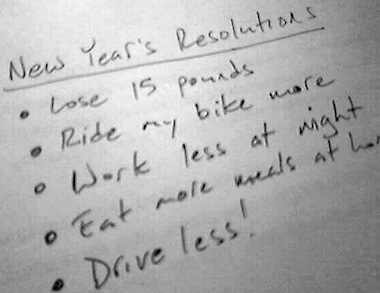
We've all heard of the yearly tradition of making a New Year's Resolution. There are so many things we should be doing, places we should be going, and habits we need to quit. Whether it's the common resolve of losing weight, quitting smoking, helping or volunteering for the needy, or going back to school, we all have great ideas about where we should be.
So, where should you be? What should you be doing? Your greatest longing or guilt driven goal tells you a lot about yourself. However, recent studies have shown that the act of making a New Year's Resolution can actually be counterproductive to your health. Even though you are vowing to change one or more things about yourself over the next year, the act of holding an unrealistic or realistic expectation could cause a backlash.
BBC (2009) has reported, "...resolutions which focus on issues such as the need to lose weight or job worries create a negative self-image. And if the plans fail to materialize, that could trigger feelings of failure and inadequacy, the charity said. Mind chief executive Paul Farmer said focusing on problems or insecurities can lead to feelings of hopelessness, low self-esteem and even mild depression. We chastise ourselves for our perceived shortcomings and set unrealistic goals to change our behavior, so it's not surprising that when we fail to keep resolutions, we end up feeling worse than when we started."
What is the difference between a RESOLUTION and a GOAL?
1. A resolution focuses on a set standard over your life (as seen taking part on New Year's Day). Resolutions are a promise to one's self for self-improvement. Generally, resolutions are only one dimensional consisting of a simple end result resolution. An accountability partner can be essential in the resolution process, however motivation can decrease for both involved unless you set a goal. Which leads us to....
2. A goal is more centered on realistic steps towards a positive direction (whether it be finding a job, losing weight, becoming more compassionate). Goals focus more on baby steps, and analyzing possible obstacles. Don't forget to grab an accountability partner! If you slip up on your journey, your accountability partner can help whip you back into shape and provide encouragement.
BBC suggests "...instead of making a New Year's resolution, think positively about the year to come and what you can achieve." Instead of easily broken resolutions in 2010, BBC suggests:
- Being active - exercise releases endorphins and even a gentle stroll is beneficial for mental well-being.
- Going green - evidence has shown that connecting with nature can boost moods.
- Learn something new - it will keep minds stimulated and give confidence.
- Give back to the community - it can be just as rewarding for you as those you choose to help."
Ultimately, I would suggest that making a resolution or a goal should only happen when you are good and ready to start the process instead of when everyone else tells you to. If you are involved in a dangerous habit or an unhealthy situation, perhaps the advice of others will help motivate and encourage you to change your ways. Let the New Year's be a tradition of renewal, processing, and hope for the future. You are never stuck!
Source:
British Broadcasting Company. (2009). Resolutions Are Bad For Your Health. Retrieved online December 28, 2009 from http://news.bbc.co.uk/2/hi/uk_news/7806776.stm.
Monday, November 30, 2009
Monday, November 16, 2009
Movie Montage

We've all seen movies depicting a 'movie montage.' The films typically express the underdog training for a fight or race, drinking healthy drinks, working out, hitting a boxing pad, and of course excessive sweating. The montage is never complete without the music: cliche 80's hits like Eye of the Tiger, a husky male voice (such as Kenny Loggins), and a female background singer who's job is solely based on repeating the anthem. The whole concept of a movie montage is to convey that a time has passed, work has been done, and the hero is now ready for the 'big fight.' He's prepared, fit, appreciative of his trainer, and of course- still sweaty.
Some of the epic movie montages include:
8. 'Teen Wolf'- Win in the End
7. 'Naked Gun'- I'm Into Something Good
6. 'Dirty Dancing'- Hungry Eyes
5. 'Revenge of the Nerds'- One Foot in front of the Other
4. 'The Karate Kid'- You're The Best
3. 'Ghostbusters'
2. 'Scarface'- Push it to the Limit
1. 'Rocky IV'- The Training Montage
And of course the best movie montage, in my opinion, is Team America-World Police "Montage"; a self-conscious take on movie montage's concentrating on cliche build-up. http://www.youtube.com/watch?v=FIi0vFyqWAc
So, you say, "Why movie montage's?" In person, I'd respond: "Why NOT movie montages?!" But since the blog needs a point consider the following:
1. If someone was to make a movie montage of the 'training' time in your life, what would the theme song be?
2. In your montage are you training for the big fight, just getting in shape, or feel like you're on your own (no trainer)?
3. Who would your trainer be (a friend, relative, co-worker, pet, God, a book, a concept)?
4. What did you train for specifically (career path, death of a friend/family member, school, sprititual battle)?
As cliche as movie montage's are, the whole concept is to convey that time has passed considerably in such a short section of film. If you're in the middle of yours, don't give up. There is always a hindsight perspective. If you've only just begun, get a great trainer and some kick butt music and truck on through.
Some of the epic movie montages include:
8. 'Teen Wolf'- Win in the End
7. 'Naked Gun'- I'm Into Something Good
6. 'Dirty Dancing'- Hungry Eyes
5. 'Revenge of the Nerds'- One Foot in front of the Other
4. 'The Karate Kid'- You're The Best
3. 'Ghostbusters'
2. 'Scarface'- Push it to the Limit
1. 'Rocky IV'- The Training Montage
And of course the best movie montage, in my opinion, is Team America-World Police "Montage"; a self-conscious take on movie montage's concentrating on cliche build-up. http://www.youtube.com/watch?v=FIi0vFyqWAc
So, you say, "Why movie montage's?" In person, I'd respond: "Why NOT movie montages?!" But since the blog needs a point consider the following:
1. If someone was to make a movie montage of the 'training' time in your life, what would the theme song be?
2. In your montage are you training for the big fight, just getting in shape, or feel like you're on your own (no trainer)?
3. Who would your trainer be (a friend, relative, co-worker, pet, God, a book, a concept)?
4. What did you train for specifically (career path, death of a friend/family member, school, sprititual battle)?
As cliche as movie montage's are, the whole concept is to convey that time has passed considerably in such a short section of film. If you're in the middle of yours, don't give up. There is always a hindsight perspective. If you've only just begun, get a great trainer and some kick butt music and truck on through.
Thursday, November 5, 2009
Finding Your Strengths!

In order to key in on how YOU can function best as a person, I challenge you to identify your strengths! You probably have a pretty good idea at some of the things that inspire you, come easy to you, and challenge you. Putting those thoughts into specific characteristics can help you see a bigger picture as to how your specific talents can fit into other areas of life.
First, think about what you're good at, what inspires you, what comes easy to you, and several characteristics that others admire about you. List your Top 4 (for example: critical thinking, hope for the future, enthusiasm, including others, task focused/OR relationship focused etc.).
Second, go to http://www.viasurvey.org/ and briefly register (FREE) to take the VIA-SURVEY FOR CHARACTER STRENGTHS. I highly recommend this questionnaire and use it in my own personal coaching sessions. It takes about 35 minutes to take the 240 question survey. When completed, it measures you on 24 different strength levels. Note your top 4 and bottom 4.
Third, take your TOP 4 STRENGTHS and think about new ways to use them. For example: if your strength is creativity, set aside specific hours to simply increase your creativity levels (by writing, reading, making). If your strength is appreciation of beauty/nature, find better ways to incorporate this into your life (take a scenic route home, take a walk after dinner, set aside time for some fresh air). Ultimately, strive to push the envelope with your strengths in order to start growing them.
Finally, when you are doing something you love, enjoy, and are good at- your body and mind will respond! You're "pleasure center" (septum pellicidium & hypothalamus) in the brain will excrete domaine into the body creating a satisfied feeling. Dopamine directly effects mood, sleep, cognition, voluntary movement, motivation, a sense of reward, attention and learning. Ultimately, the more you grow and pay attention to YOUR STRENGTHS, your body responds positively.
Additionally, I recommend the Keirsey Personality Test (www.keirsey.com). Shorter versions of the test can be found by searching Myers Briggs (aka Keirsey).
Find what you're good at and GROW it!
Friday, October 2, 2009
Perfecting Ourselves To Death

Perfectionism is an avoided and yet prided word with connotations of straightening pencils and perfect clothes. Some perfectionists can be seen as simply hardworking and motivated; others let it affect their attitudes, health, and ultimately their relationships.
So, what type of perfectionist are you? I'm not talking about taking a self-quiz and getting a silly result that is so general and broad as a fortune cookie. Perfectionism can be split into several categories. Most of us with this trait can be dominant in one category while mixed slightly into others.
I recently attended a conference and heard the author, Richard Winter, speak about his book Perfecting Yourself to Death: The Pursuit of Excellence and the Perils of Perfectionism. Not only was his information a new and innovative in the area of the healthy vs. unhealthy perfectionist, but his English accent was swimmingly surprising. So, below I'll let you in on a few of his secrets (laid out in his book, but also in the notes of his lecture):
Types of Perfectionism:
- Appearance
- Performance/Academic
- Moral
- All round (all encompassing)
- Perfectionists think in ALL or NOTHING terms!
Unhealthy Perfectionists:
- Have standards that are high beyond reach or reason
- Strain compulsively and unremittingly toward impossible goals
- Feel their best efforts are never good enough
- Unable to feel satisfaction or joy in a job well done
- Measure their own worth entirely in terms of productiv ity and accomplishment
- Preoccupied with performance and/or appearance
Normal/Healthy Perfectionists (Person of Excellence):
- Pursue excellence
- Derive a very real sense of pleasure from the labors of a painstaking effort to meet high standards
- Feel free to be less precise as the situations permits
- Rejoice in their skills
- Appreciate a job well done
The 3 Dimensions of Perfectionists- Which One Are You?
- Self-Oriented: demand yourself to be better (high standards for yourself only); under stress you break down to unhealthy perfectionism and tend toward neutrotism. This type of dimension tends to be only related to your person only, no one else (your little bubble and your standards only).
- Socially Prescribed: perceived expectations of others very high; self-worth is contingent on others approval. Social situations depend on your thoughts of "Am I saying the right thing?" "Do I live up to their standards?"
- Others-Oriented: "Why can't everyone else do things the way I do things?" Very morally conscious; tends to set high standards for everyone else. Can be bossy, leadership qualities are high but when under stress can lead to unhealthy ranges.
Thought Patterns of Perfectionists:
- All or nothing
- Need for control
- Tyranny of "outs and "shoulds"
- Trying to live outside reality
- Perception of consistency failing to meet high standards set by self or others
- Shame, social comparison, inferiority
- Fear of making mistakes
- Fear of failure and rejection
- Discrepancy between perceieved and ideal self
Some Perils of Perfectionism:
- Anxiety & worry
- Indecisiveness and procrastination
- Decreased productivity and performance
- Impaired health (headaches, psychosomatic issues)
- Eating disorders
- Depression and suicidal ideas
- Relationship problems (Other-Oriented: critical and leaves broken hearts; Self-Oriented: afraid of opening up because of rejection)
- Obsessive comulsive Personality and OCD- desired sense of control.
OCD Vs. Perfectionism
- Perfectionism is one side of the spectrum dealing with control and anxiety- usually within a mindset that can be triggered and activated. Easy to change within most settings through therapy and therapuetic settings (talk therapy with friends or even relaxation).
- OCD is the other more extreme side of the spectrum dealing with higher control and anxiety- very similiar yet more ingrained in the brain dealing with personality and psychological issues. Hard to change without intense therapy, medication and cognitive behavioral help.
The Roots of Perfectionism
- Genes (can be found in family generations)
- Culture (Military, Asian cultures, Medical field, Media)
- Family (parental grace vs. shame, expectations, Freud/anal fixations)
- School
- Church
- Fear of failure, rejection or loss of control
- Pride
- Shame
Practical Strategies for Health: Learning to Live with Imperfection
- Evaluate Pros/cons
- recognize all or nothing patterns (keep a journal of thoughts/feelings)
- Move from idealism to reality
- Resist the Devil (arm yourself with truth)
- Accept day by day, little by littlework on small goals
Winter, Richard. (2009). Perfecting Ourselves To Death: The Pursuit of Excellence and The Perils of Perfectionism. As heard at the AACC World Conference 9/19/2009.
Tuesday, September 22, 2009
If You DON'T Snooze, You LOSE!!!
 At the World Conference of Christian Counselors, I went to a lecture with the above appropriated title. Having insomnia since early infancy, I was a little sceptical about the information to be presented. I have tried just about every option in the insomniacs personal stash: a new high tech mattress, velvet blankets, pillows, noise machines, fans, awesome pjs, warm milk, sleep drugs in every category known to man, tea, baths, meditation, prayer..you name it- it's right here. In addition to trying everything, I have also paid for psychiatrists (with much success I might add), talk therapy, muscle testing, holistic medicine... the works. You get the idea.
So here it was, 8:45am. I was loaded with coffee walking into a lecture on sleep. Dr. Lyles was blessed with a humerous outlook that helped all of us stay focused on not falling asleep! Here are some of the most profound facts:
If you sleep under 4 hours a night here is what happens to your body:
- Decrease in: mood, cognition, vigilence/reflexes, pain tolerence, immune function, glucose metabolism, pulmonary functions, growth/thyroid/prolactin/leptin hormones, seizure threshold
- Increase in: blood pressure, inflammatory ctokines, eveing cortisol, caloric intake after one night of deprivation.
- Every night you sleep under 4 hours a night.....IT TAKES 3 DAYS TO RECOVER!!!!!!
Psychiatric Disorders & Sleep
- Anxiety: Initial( can't fall asleep)/middle (wake up in the middle of the night) insomnia (50% GAD patients). Bedtime Worry/Tension
- Mania: Decreased need for sleep and decreasded total sleep time. Insomnia is predictive of relapse into mania.
- PTSD: Nightmares, Increase REM density, inability to maintain sleep.
- Panic Disorder: nocturnal panic attacks.
Depression & Sleep
- 20% of insomniacs have depression
- Sleep disturbance and fatigue are predictive of future depression
- Increased rates of relapse in remitted depressed patients with continuing sleep disturbance
- Initual (can't fall sleep), middle (wake up in the middle of the night) or terminal insomina
- Atypical depression goes into hypersmonia
- Single night sleep deprivation may temporarily decrease depression (a nap reverses it).
Fibromyalgia
- Diffuse musculoskeletal pain, chronic fatigue, non-restorative sleep and tender points in the muscles
- Unique presensce of Alpha waves during NREM sleep, esp. stages 3 & 4
- Highly associated with depression
- Treatment of sleep disorder is a core priority
Sleep Hygiene to Enhance Nighttime Sleep
- Avoid naps during the day
- Regular bedtime and rise times
- Avoid non-sleeping time in bed
- Avoid alcohol, nicotine, or caffiene
- Minimize exercise near bedtime
- Maximize bed comfort and room temperature
- Elimiate light and noise
- Get out of bed if unable to initiate sleep and try again later
- Avoid mental work near bedtime
Sleep: If You Don't Snooze: You Lose- Michael Lyles, M.D. Notes, Powerpoint. As seen from AACC World Conference, 2009.
Subscribe to:
Comments (Atom)